Cool Pineapple: A Designer’s Practical Review
First Impressions: The Personality of Cool Pineapple
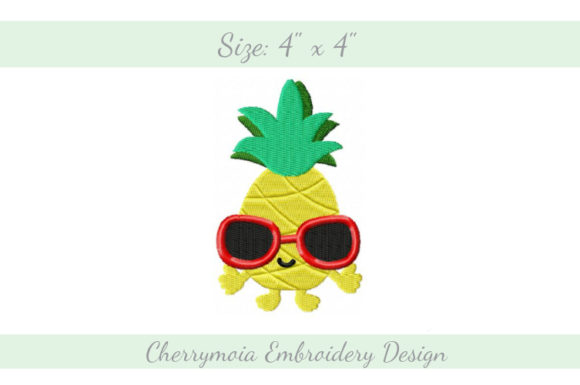
Opening a new embroidery file always brings a mix of curiosity and caution. With Cool Pineapple, the first thing that hits me is the mood. It’s unmistakably summer—bright, relaxed, and a little playful. The shape doesn’t try to be a botanical study; it leans into the friendly, recognizable silhouette we all associate with warm weather, hospitality, and casual get-togethers. I can already picture it stitched on a canvas tote or a linen tea towel, instantly giving the product a cohesive, seasonal feel.
The design’s visual personality feels modern but not overly trendy. It avoids fussy details that might get lost in thread, and instead relies on a clean, confident outline and well-placed internal sections. That’s a smart choice. In machine embroidery, clarity often beats complexity. When I see a design like this, I immediately think about how it will read from a few feet away—on a market table, or slung over a shoulder. Cool Pineapple holds that test. It’s legible, friendly, and carries that “cool” factor without trying too hard.
Real-World Scenario: Stitching Cool Pineapple on a Summer Tote
Let me walk you through a real project I had in mind. A small boutique wanted a limited run of embroidered tote bags for a beachside pop-up. The vibe was relaxed luxury—simple, natural fabrics with a single statement motif. Cool Pineapple felt like the obvious choice. I tested it on a medium-weight cotton canvas in a soft oatmeal color. The design’s tropical theme anchored the whole piece, and the stitch definition held up beautifully on that stable fabric.
I used a cutaway stabilizer—always my go-to for totes that will carry weight and need durability. The satin-stitch border on the pineapple’s crown caught the light without distorting, and the internal fill stitches laid down evenly. I did notice one small area where the density felt slightly heavier, so I made a note to run a test on a scrap of the same fabric first, which is something I’d recommend for anyone. The finished tote looked like a boutique item, and the customer reaction at the pop-up confirmed it: people smiled, touched the stitching, and asked if it came in more colors. That’s the power of a design that taps into a universally loved symbol.
How Cool Pineapple Holds Up in Different Embroidery Applications
Not every design works across all product types, and Cool Pineapple is no exception. I’ve mentally walked it through several common use cases to see where it shines and where it needs a little extra thought.
Custom Apparel
On a sweatshirt or a relaxed-fit t-shirt, this design adds a subtle tropical accent without overwhelming the garment. I’d place it on the left chest or as a back neck detail. For baby clothes, the playful theme is perfect, but I’d be mindful of the stitch density against delicate skin—a soft backing layer on the inside of a onesie can make all the difference.
Kitchen and Home Linens
Tea towels, aprons, and pillow covers are natural homes for Cool Pineapple. On a flour-sack towel, the design feels crisp and seasonal. I’d stick to a smooth, non-textured linen or cotton weave to avoid losing detail. On a pillow cover, centered just above the hem, it becomes a cheerful accent that lifts the whole room.
Hats and Caps
This is where I’d proceed with caution. The curved surface of a cap can distort even the best designs. If the Cool Pineapple file has a wide footprint or very fine details near the edges, you might see registration issues. I’d test on a structured cap with a firm front panel and use a cap hoop if your machine supports it. Start with a slower speed and watch that needle.
Embroidered Patches
If you’re thinking of creating patches, the design’s outline and bold shape are a benefit. Stitch it on twill or felt with a dense border, and you’ll get a clean, ready-to-sell patch. Just remember: the file is a digital embroidery design, so you need an embroidery machine to stitch it out. You cannot print it directly onto fabric.
Where to Use Cool Pineapple With Extra Care
Every design has its limits, and being honest about them saves time, money, and frustration. After working with similar motifs, here’s where I’d apply extra caution with Cool Pineapple:
- Small hoop sizes: If the design is scaled down too much, fine details can close up and thread breaks become a risk. The seller clearly states that quality can not be guaranteed when resizing or altering the design, so I strongly recommend stitching at the original size.
- Stretchy fabrics: Knits, jerseys, and performance fabrics demand a high-quality stabilizer and possibly a topper to prevent distortion. Test on a swatch before committing to a finished garment.
- Dark fabrics: Light thread colors might need an underlay or a slightly higher density to pop against a dark background. Do a test stitch to check contrast.
- Thin or loosely woven fabrics: Thread tension can pull the fabric, leading to puckering. A tear-away stabilizer alone may not be enough; consider a wash-away topper for a cleaner finish.
- Frequent washing: If you’re making kitchen towels or baby items that will be washed often, pay attention to thread quality and secure all jumps. A dense design can feel stiff, so balance is key.
The Visual Impact: How Cool Pineapple Elevates Handmade Products
There’s a reason pineapple motifs keep showing up in handmade markets. They signal warmth, welcome, and a touch of the unexpected. Cool Pineapple brings that psychological hook into a physical product. When a customer sees this stitched on a towel or a tote, they don’t just see a fruit—they feel the summer vibe, the vacation memory, the gift that says “I thought of you.” That emotional connection raises the perceived value of the item instantly.
For small business owners, this design supports brand consistency. If you’re building a seasonal collection, Cool Pineapple can tie together apparel, home goods, and accessories under one visual story. It’s also highly giftable. A set of embroidered napkins with this motif, paired with a simple ribbon, becomes a ready-to-present wedding or hostess gift. The design’s clarity and positive theme make it a safe bet for buyer engagement, whether you’re selling on Etsy or at a local craft fair.
Designer Notes: Testing and Preparing Cool Pineapple for Production
Before you stitch out the first finished piece, I always recommend a thorough test run. Here’s a practical checklist I follow with any new digital embroidery file, including Cool Pineapple:
- Stitch density check: Watch for areas where the thread coverage feels too thick or too sparse. Adjust your machine’s tension or add an underlay if needed, but don’t alter the file itself—resizing or editing can break the stitch integrity.
- Thread color contrast: Test on the exact fabric color you plan to use. A bright yellow pineapple crown might look amazing on white but get lost on a pale yellow background. Sometimes a slightly darker or lighter thread shade makes all the difference.
- Hoop size confirmation: Make sure the design fits comfortably inside your hoop with enough clearance for the presser foot. Forcing a design into a too-small hoop leads to registration errors.
- Stabilizer selection: Match the stabilizer to the fabric and the end use. For a tote bag, I use cutaway. For a decorative pillow that won’t be washed heavily, a tear-away might be fine. Always test on scrap fabric first.
- Black and white mockup check: Print a preview of the design in grayscale. If the shapes still read clearly without color, you know the design’s structure is strong. This is a great way to spot potential blending issues.
- License review: Because this is a digital embroidery file, you need to verify whether the seller allows commercial use on finished products. Some designers permit it, some don’t. Always check before selling stitched items.
Cool Pineapple as a Business Asset for Etsy Sellers and Craft Entrepreneurs
If you’re stocking a summer shop, Cool Pineapple can be a workhorse design. It’s versatile enough to fit into multiple product lines, yet specific enough to catch the eye of shoppers looking for seasonal items. I’ve seen pineapple themes perform well on tote bags, unisex sweatshirts, and even as small accents on baby bibs. The key is to present it in a way that feels curated, not generic.
For digital product sellers, a clean, well-stitched mockup of this design can boost your listing’s appeal. Use it in a printable mockup or a digital preview to show buyers exactly how it will look on a finished product. Just remember: you’re selling the physical stitched item, not the embroidery file itself, unless you have explicit permission to resell the digital design. Most crafters I know use designs like this to create their own line of boutique-quality goods, and that’s where Cool Pineapple shines.
Final Practical Thoughts on Cool Pineapple
After putting Cool Pineapple through the mental paces of a real embroidery project, I’d say it’s a solid design for anyone leaning into summer themes. It’s not overly complex, which makes it a reliable choice for production runs, and the cheerful mood does a lot of the selling for you. The fact that it’s a digital embroidery file means you need an embroidery machine and the willingness to test before you commit. The seller’s note about resizing is important: don’t expect to shrink it down for a tiny patch or blow it up for a jacket back without losing quality. Stitch it as intended, and you’ll get a clean, professional result.
If you’re a maker who wants to add a dose of tropical personality to your products, Cool Pineapple is worth adding to your library. I’d use it on tote bags, kitchen linens, and casual apparel without hesitation. Give it a stable fabric, a thoughtful stabilizer, and a little pre-stitch testing, and you’ll have a summer staple that keeps your customers smiling.